
Court-related treatment support
Court-Ordered Addiction Treatment Support in Massachusetts
When court involvement and substance use overlap, families often need calm answers: what treatment can mean, what outpatient care can and cannot provide, and how to take the next step without making promises the court has not made.
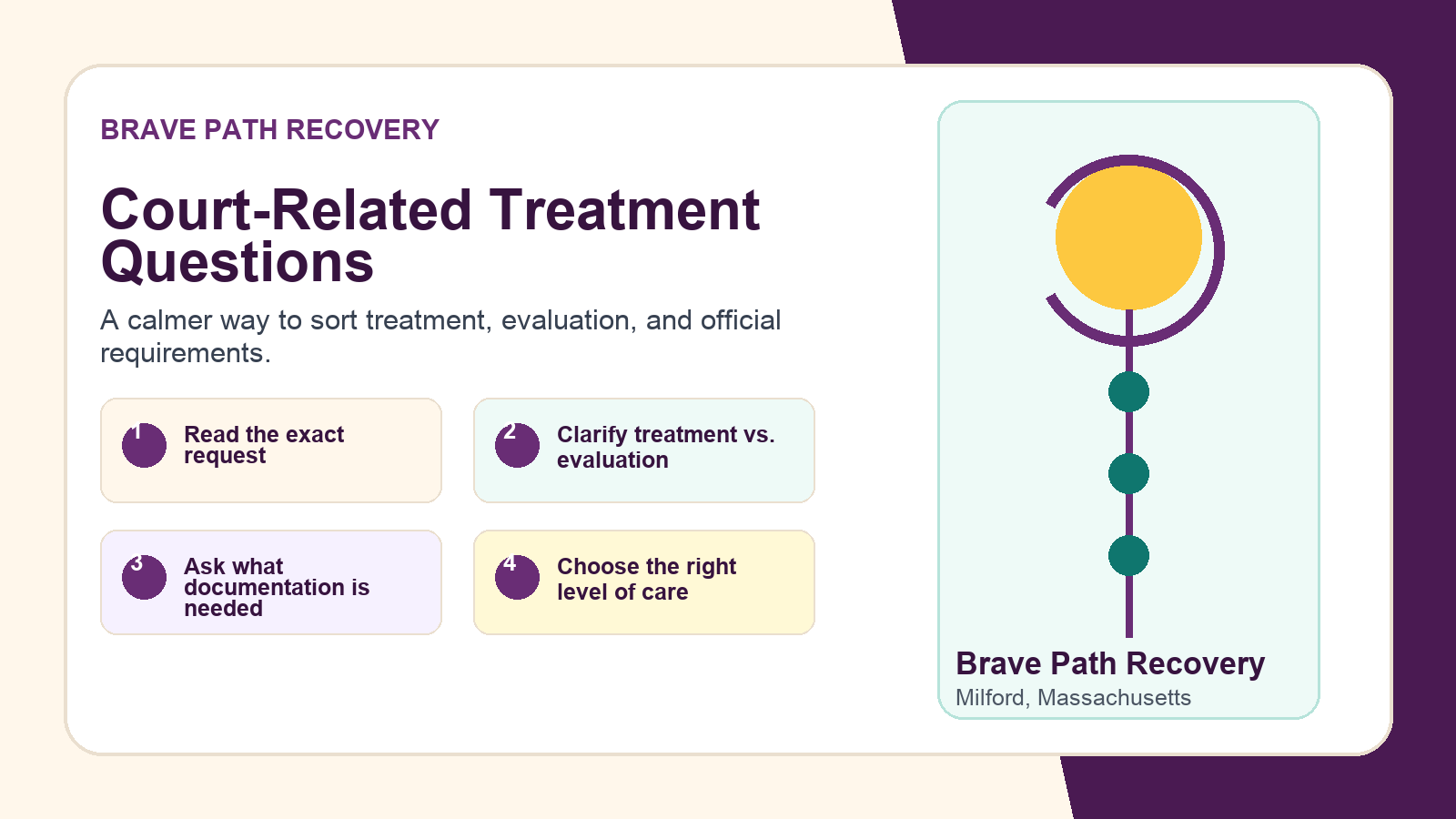
Short answer
Brave Path Recovery can help adults and families talk through outpatient treatment options when substance use is part of a court-related situation. A court, probation officer, attorney, evaluator, or approved program may have specific requirements. Brave Path does not replace those instructions, but treatment may still be part of the recovery plan before, after, or alongside legal involvement.
If you are still trying to understand whether you need treatment, an evaluation, 24D education, or a Section 35 process, this page connects the major paths and links to the deeper resources.
What court-ordered or court-mandated treatment can mean
People use phrases like court-ordered treatment, court-mandated rehab, mandatory addiction treatment, court-appointed services, and court-related substance use support in different ways. Sometimes they mean a judge has ordered treatment. Sometimes they mean probation or another legal process is asking for proof that a person is getting help.
The safest first step is to understand the exact request in front of you. If the document asks for a substance use evaluation, start with the substance use evaluation guide. If it mentions alcohol education after an OUI, review the 24D program guide. If a family member is asking about involuntary commitment for alcohol or substance use disorder, the Section 35 guide is the better starting point.
When outpatient addiction treatment may fit
Outpatient care can be useful when a person needs structured therapy and recovery support while still living at home. Brave Path offers treatment in Milford, Massachusetts, with options that may include part-time day treatment, full-time day treatment, group therapy, individual support, and care for co-occurring mental health concerns.
Outpatient treatment is not the right fit for every situation. If someone needs medical withdrawal support, secure care, residential treatment, hospital-level care, or immediate emergency help, another setting may be necessary before outpatient planning.
How this differs from classes, evaluations, and legal advice
Treatment, classes, and evaluations are not the same thing. A person may be asked for an evaluation before treatment is recommended. Someone else may need a court-approved alcohol education program. Another person may already know they need treatment and wants support close to home. Our classes versus treatment resource explains the difference in plain language.
Brave Path does not give legal advice, decide what a court will accept, or promise that any document will satisfy a legal requirement. Those questions belong with the court, attorney, probation office, evaluator, or official program connected to the case.
What to ask before starting
Ask what level of care is being requested, whether an evaluation is required first, whether there are deadlines, what documentation is needed, and who needs to receive updates. If cost is part of the decision, the resource on who pays for court-related rehab or therapy can help you prepare better questions before calling.
Common questions
Is Brave Path a court-approved program?
Brave Path can discuss outpatient treatment fit, but the court, probation office, evaluator, or official program must confirm whether a specific treatment plan or document meets a requirement.
Can outpatient care help during probation or legal involvement?
It may help when outpatient treatment is clinically appropriate and aligns with the requirements you were given. Bring any paperwork or instructions to the first conversation so the team understands what is being asked.
What if someone is being forced into treatment?
If there is a formal court order or a Section 35 concern, start with official sources and legal guidance. Brave Path can talk about voluntary outpatient care and next-step planning, but it is not a locked or secure commitment facility.
What if alcohol is the main concern?
Alcohol-specific questions may fit the court-related alcohol treatment page or the 24D program guide, depending on whether the issue is treatment support or an OUI education requirement.
Helpful next resources
Section 35 in Massachusetts
For family questions about involuntary commitment and official Massachusetts sources. Section 35 family guide.
Substance use evaluation questions
For people asked to complete an assessment or provide evaluation documentation. court-ordered substance use evaluation guide.
Court-related therapy and counseling
For mental health, counseling, and therapy-focused court-related questions. court-ordered therapy and counseling guide.
Talk through the next step
If outpatient care may fit, Brave Path can help you ask clearer questions about treatment options, schedule, scholarship opportunities, and what a first conversation can clarify. Start with the contact page or review Brave Path treatment programs.