
Grief Counseling in Massachusetts
When grief is affecting mood, sleep, relationships, or recovery, Brave Path Recovery can help you understand whether structured outpatient support fits.
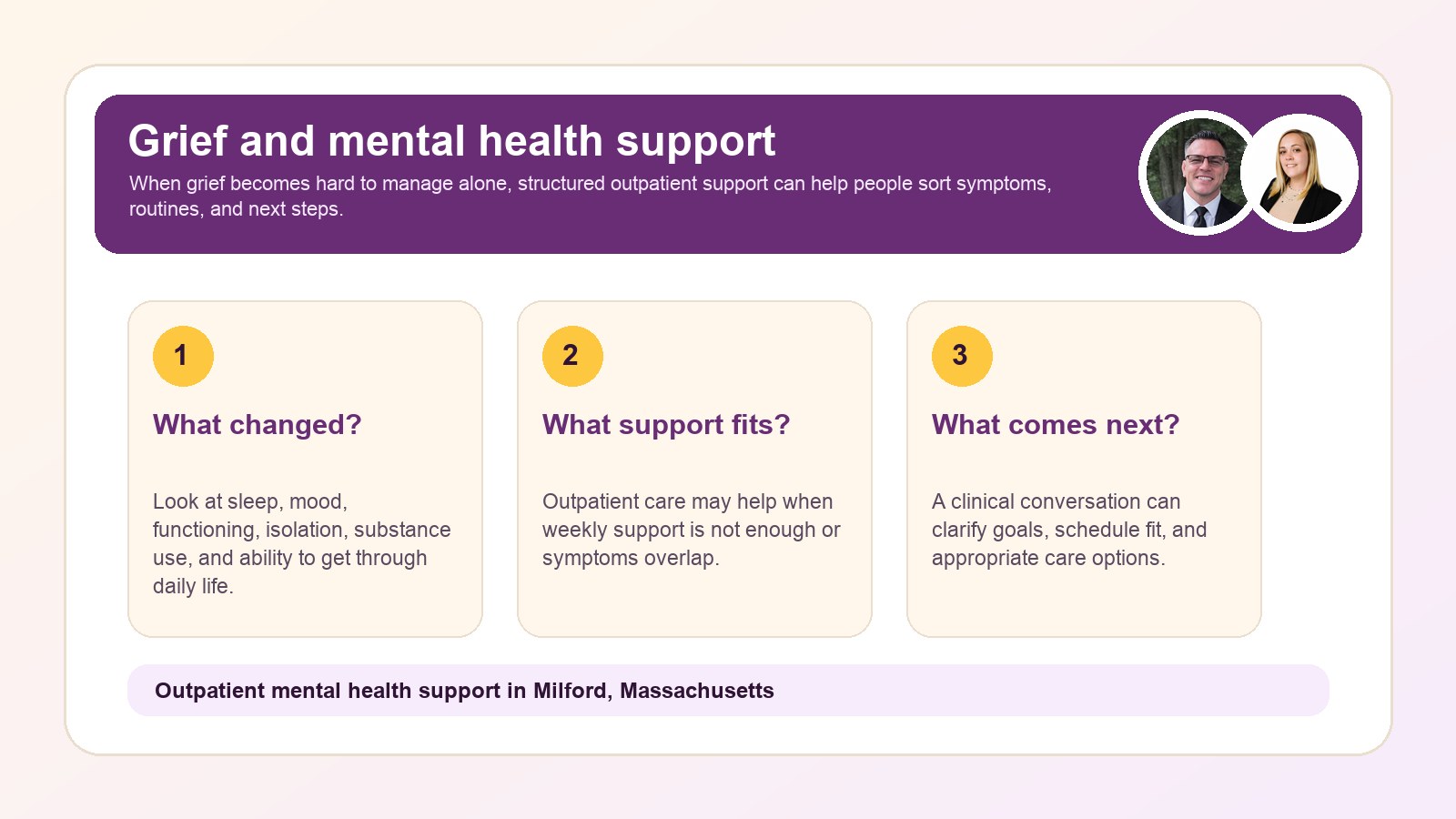
Support for loss, mood changes, and recovery stress
Not everyone who is grieving needs treatment. Support can become important when grief is paired with isolation, heavy drinking or drug use, panic, depression, anger, guilt, numbness, or a sense that life has become unmanageable.
Grief with depression or anxiety
Loss can intensify symptoms that were already present. Brave Path can help determine whether depression support, anxiety treatment, or a broader mental health plan is the better fit.
Grief with substance use
Some people begin drinking or using more after a loss because it quiets pain, guilt, or sleeplessness for a short time. If that is happening, dual diagnosis support may be the safer starting point.
Sudden or traumatic loss
A sudden death, overdose, accident, or violent loss can leave people with intrusive memories, avoidance, anger, fear, or a constant sense of being on guard. The first step is a careful conversation about safety and fit.
Support that fits real life
Depending on need, Brave Path may discuss individual therapy, group therapy, or structured day treatment. The goal is support around the person, not forcing grief into a timeline.
What a first call can clarify
A first call can help sort out what has changed since the loss, what feels most urgent, whether there are safety concerns, and what level of care may be appropriate. It can also help families understand whether outpatient care is enough or whether a higher level of support should be considered first.
If you are trying to find the right starting point, review Brave Path’s mental health treatment options, group therapy in Milford, or contact the team with questions about what you are experiencing.
- Grief affecting mood, sleep, or daily responsibilities
- Loss connected to increased alcohol or drug use
- Family uncertainty about what level of support fits
- Safety questions that need to be addressed early
Important safety note
This page was updated on May 19, 2026. It is educational and cannot diagnose a condition, guarantee admission, or replace care from a licensed professional. If you or someone else is in immediate danger, call 911. If you are thinking about suicide, feel unable to stay safe, or need urgent emotional support, call or text 988.
Questions families often ask before reaching out
Is grief counseling only for a recent loss?
No. Some people ask for help months or years after a loss because something in life has changed, an anniversary is approaching, or the pain has started showing up in mood, sleep, relationships, or substance use.
Can outpatient support help if grief is affecting sobriety?
It may. If grief is tied to cravings, relapse risk, or increased alcohol or drug use, integrated care can be more useful than talking about substance use without the loss underneath it.