First Responder Mental Health Care in Massachusetts
When emergency work starts affecting sleep, mood, relationships, or substance use, Brave Path Recovery can help you assess whether outpatient support fits.
When the work starts following you home
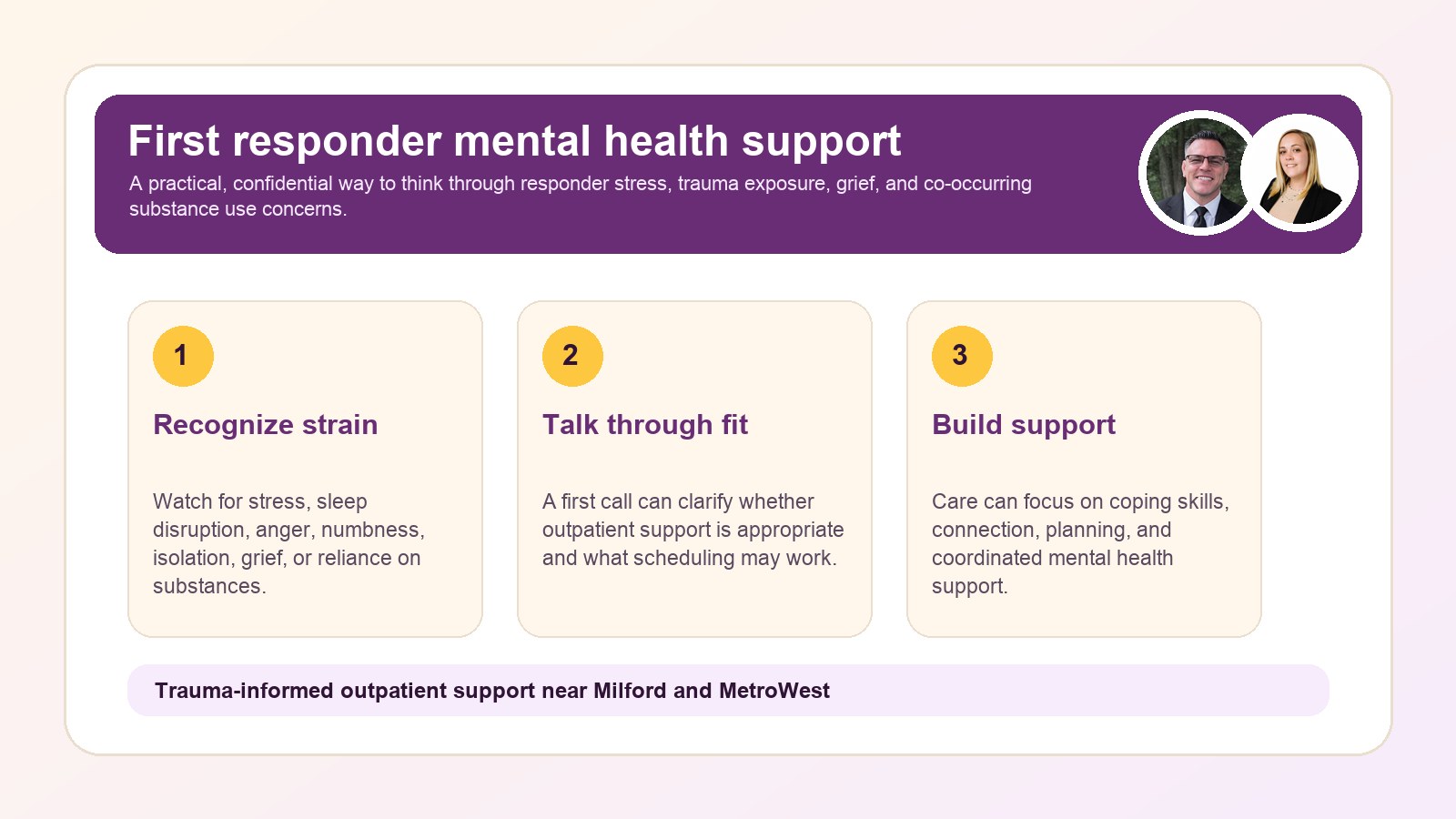
Support may be worth considering when stress is showing up as poor sleep, irritability, panic, numbness, anger, drinking or drug use, relationship strain, intrusive memories, or feeling unable to come down after a shift.
Care that respects the work
Emergency work can make people minimize their own symptoms because someone else always seems to have it worse. A good first conversation should make room for that reality without dismissing what you are carrying.
Stress, trauma, and mood symptoms
Depending on assessment, Brave Path may discuss structured therapy and support, therapy, group support, or a higher level of care if outpatient support is not enough.
Alcohol or drug use after shifts
If substances have become part of how you sleep, disconnect, or manage memories from the job, integrated care may be a better starting point than treating work stress and substance use separately.
Privacy and practical fit
A first call can clarify scheduling, level of care, payment and scholarship questions, privacy concerns, and whether Brave Path is clinically appropriate for what is happening now.
Who this page is for
This page is written for adults in roles such as EMS, fire service, law enforcement, dispatch, emergency healthcare, and disaster response. It may also be useful for family members who are watching someone become more withdrawn, reactive, exhausted, or reliant on substances after difficult calls.
Related Brave Path resources include part-time day treatment, full-time day treatment, group therapy, and addiction treatment support.
- Sleep, anger, panic, or numbness after difficult calls
- Alcohol or drug use becoming part of coping
- Relationship strain or isolation off shift
- Questions about scheduling, fit, and privacy
Important safety note
This page was updated on May 19, 2026. It is educational and cannot diagnose a condition, guarantee admission, or replace care from a licensed professional. If you or someone else is in immediate danger, call 911. If you are thinking about suicide, feel unable to stay safe, or need urgent emotional support, call or text 988.
Questions before starting care
Do I need a diagnosis before calling?
No. You can call because something is harder than it used to be: sleep, anger, drinking, panic, focus, relationships, or getting through days off. The assessment process helps determine what kind of care may fit.
Can Brave Path help if substance use is involved?
Brave Path supports adults with mental health and substance use concerns. If withdrawal risk, medical instability, or immediate safety concerns are present, a higher level of care may need to come first.