Signs are a starting point for assessment

Changes in mood, anxiety, daily functioning, and substance use can be reasons to seek a professional assessment. They do not establish a diagnosis by themselves. Share concerns when alcohol or drug use and emotional difficulties are both affecting your life, even if you are unsure how they are connected. Learn about dual diagnosis treatment in Milford at Brave Path Recovery.

What to tell the clinician

Describe when each concern began, any previous diagnoses, and what treatment you have already tried. Explain whether you use more than intended, find it hard to stop, or keep using despite problems. Include changes in sleep, work, relationships, and safety. The aim is a full picture rather than deciding which problem deserves attention first.
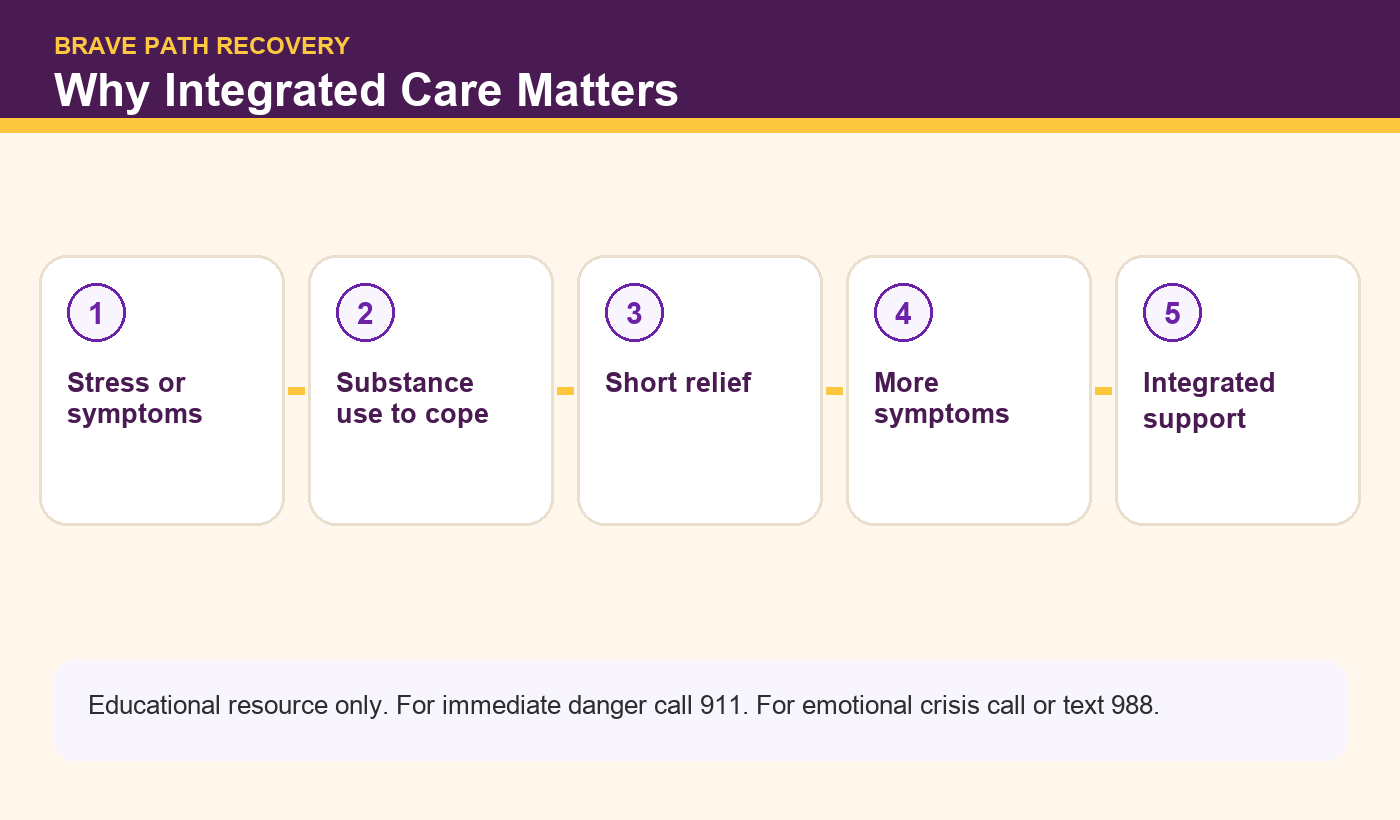
Brave Path Recovery infographic: Why Integrated Care Matters

What an assessment can clarify

Ask how the provider evaluates both substance use and mental health, who will be involved, and what follow-up is needed. If more than one professional is caring for you, ask how their recommendations will fit together. A useful plan gives you a clear contact for questions.

Bring a support person if you want

A trusted person may help recall changes or write down next steps, if you choose to involve them. Ask the program about consent and participation. To understand what happens after assessment, read building a coordinated care plan for co-occurring disorders.

Talk with Brave Path Recovery

For non-emergency questions about outpatient care, call (617) 991-3664 or contact our team. Ask about current services and the next step for an assessment.

Further reading

NIMH: Co-Occurring Substance Use and Mental Disorders

Meet the people behind Brave Path Recovery

Damien Trites, Founder & Executive Director, guides Brave Path’s mission and community. Ryann Whitaker, Program Director, leads day-to-day program operations.

Published by Brave Path Recovery. This educational information does not replace an individual assessment. For program questions or to report a correction, contact our team.
Dual Diagnosis: Signs to Discuss With a Clinician

Brave Path Recovery

Signs are a starting point for assessment

Changes in mood, anxiety, daily functioning, and substance use can be reasons to seek a professional assessment. They do not establish a diagnosis by themselves. Share concerns when alcohol or drug use and emotional difficulties are both affecting your life, even if you are unsure how they are connected. Learn about dual diagnosis treatment in Milford at Brave Path Recovery.

What to tell the clinician

Describe when each concern began, any previous diagnoses, and what treatment you have already tried. Explain whether you use more than intended, find it hard to stop, or keep using despite problems. Include changes in sleep, work, relationships, and safety. The aim is a full picture rather than deciding which problem deserves attention first.

Brave Path Recovery infographic: Why Integrated Care Matters

What an assessment can clarify

Ask how the provider evaluates both substance use and mental health, who will be involved, and what follow-up is needed. If more than one professional is caring for you, ask how their recommendations will fit together. A useful plan gives you a clear contact for questions.

Bring a support person if you want

A trusted person may help recall changes or write down next steps, if you choose to involve them. Ask the program about consent and participation. To understand what happens after assessment, read building a coordinated care plan for co-occurring disorders.

Talk with Brave Path Recovery

For non-emergency questions about outpatient care, call (617) 991-3664 or contact our team. Ask about current services and the next step for an assessment.

Further reading

NIMH: Co-Occurring Substance Use and Mental Disorders

Meet the people behind Brave Path Recovery

Damien Trites, Founder & Executive Director, guides Brave Path’s mission and community. Ryann Whitaker, Program Director, leads day-to-day program operations.

Published by Brave Path Recovery. This educational information does not replace an individual assessment. For program questions or to report a correction, contact our team.

Scroll to Top