One plan can connect several kinds of support

Co-occurring disorders refers to mental health and substance use disorders occurring together. After assessment, ask how the plan will address both concerns. Treatment may involve multiple professionals, but you should know how their work connects and whom to contact when questions arise. Learn about care for co-occurring disorders at Brave Path Recovery.

Clarify who does what

Write down the roles of your therapist, substance use treatment team, prescriber, and primary care provider where applicable. Ask who tracks follow-up needs and how records can be shared with your consent. Discuss medication decisions with your prescribing clinician, and ask how the therapy team will coordinate any services you receive elsewhere.
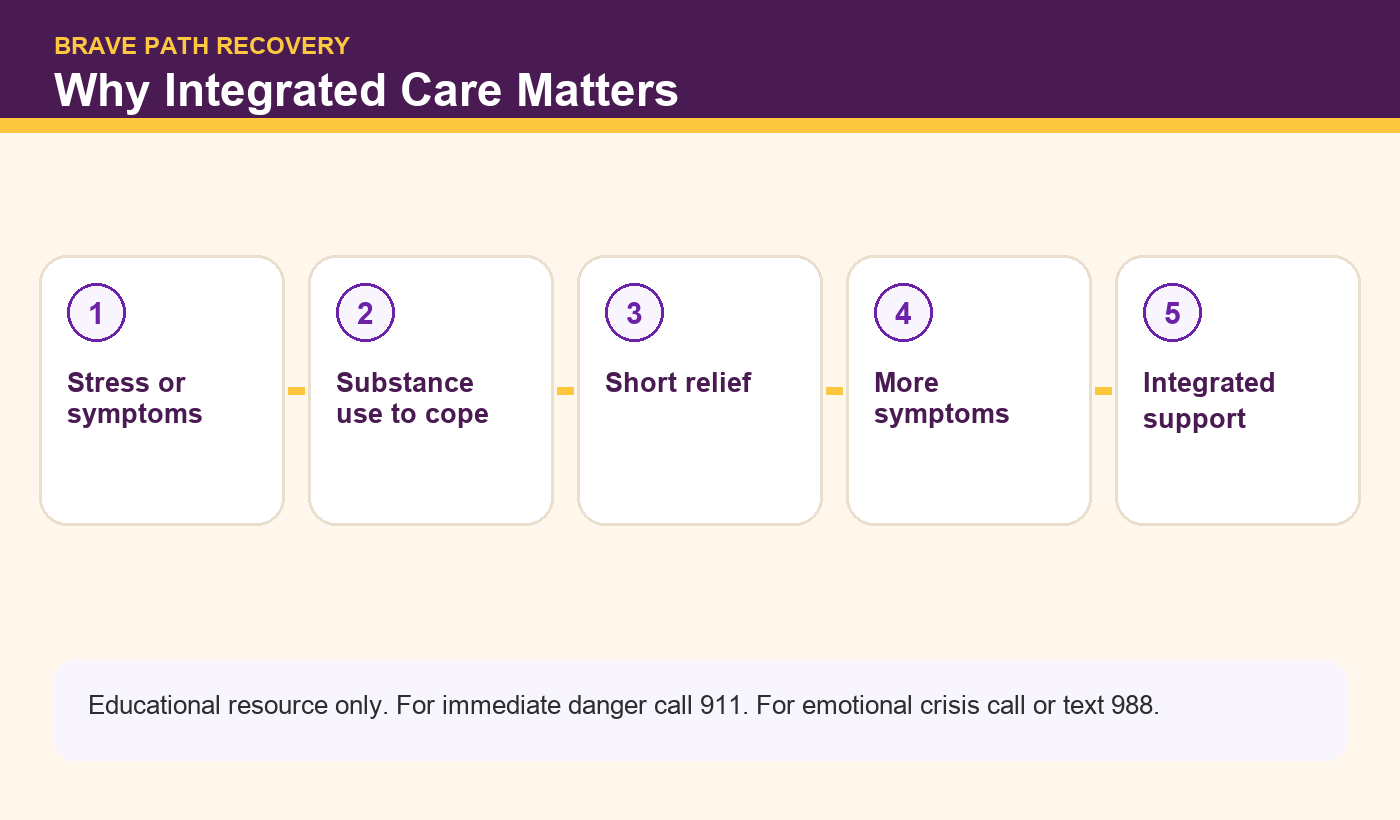
Brave Path Recovery infographic: Why Integrated Care Matters

Choose goals that reflect everyday recovery

Discuss what better functioning would look like to you. Goals might involve keeping appointments, responding differently to a difficult situation, or rebuilding a routine. Ask how the team will review both mental health symptoms and substance use concerns rather than considering only one part of progress.

Plan transitions before they happen

When your schedule changes or one service ends, ask which appointments continue, what records are needed, and who will help arrange the next step. A written follow-up plan can reduce confusion when several providers are involved. Learn more about continuing care after detox.

Talk with Brave Path Recovery

For non-emergency questions about outpatient care, call (617) 991-3664 or contact our team. Ask about current services and the next step for an assessment.

Further reading

NIMH: Co-Occurring Substance Use and Mental Disorders

Meet the people behind Brave Path Recovery

Damien Trites, Founder & Executive Director, guides Brave Path’s mission and community. Ryann Whitaker, Program Director, leads day-to-day program operations.

Published by Brave Path Recovery. This educational information does not replace an individual assessment. For program questions or to report a correction, contact our team.
Co-Occurring Disorders: Making a Coordinated Recovery Plan

Brave Path Recovery

One plan can connect several kinds of support

Co-occurring disorders refers to mental health and substance use disorders occurring together. After assessment, ask how the plan will address both concerns. Treatment may involve multiple professionals, but you should know how their work connects and whom to contact when questions arise. Learn about care for co-occurring disorders at Brave Path Recovery.

Clarify who does what

Write down the roles of your therapist, substance use treatment team, prescriber, and primary care provider where applicable. Ask who tracks follow-up needs and how records can be shared with your consent. Discuss medication decisions with your prescribing clinician, and ask how the therapy team will coordinate any services you receive elsewhere.

Brave Path Recovery infographic: Why Integrated Care Matters

Choose goals that reflect everyday recovery

Discuss what better functioning would look like to you. Goals might involve keeping appointments, responding differently to a difficult situation, or rebuilding a routine. Ask how the team will review both mental health symptoms and substance use concerns rather than considering only one part of progress.

Plan transitions before they happen

When your schedule changes or one service ends, ask which appointments continue, what records are needed, and who will help arrange the next step. A written follow-up plan can reduce confusion when several providers are involved. Learn more about continuing care after detox.

Talk with Brave Path Recovery

For non-emergency questions about outpatient care, call (617) 991-3664 or contact our team. Ask about current services and the next step for an assessment.

Further reading

NIMH: Co-Occurring Substance Use and Mental Disorders

Meet the people behind Brave Path Recovery

Damien Trites, Founder & Executive Director, guides Brave Path’s mission and community. Ryann Whitaker, Program Director, leads day-to-day program operations.

Published by Brave Path Recovery. This educational information does not replace an individual assessment. For program questions or to report a correction, contact our team.

Scroll to Top