
Talk about both concerns in the same conversation
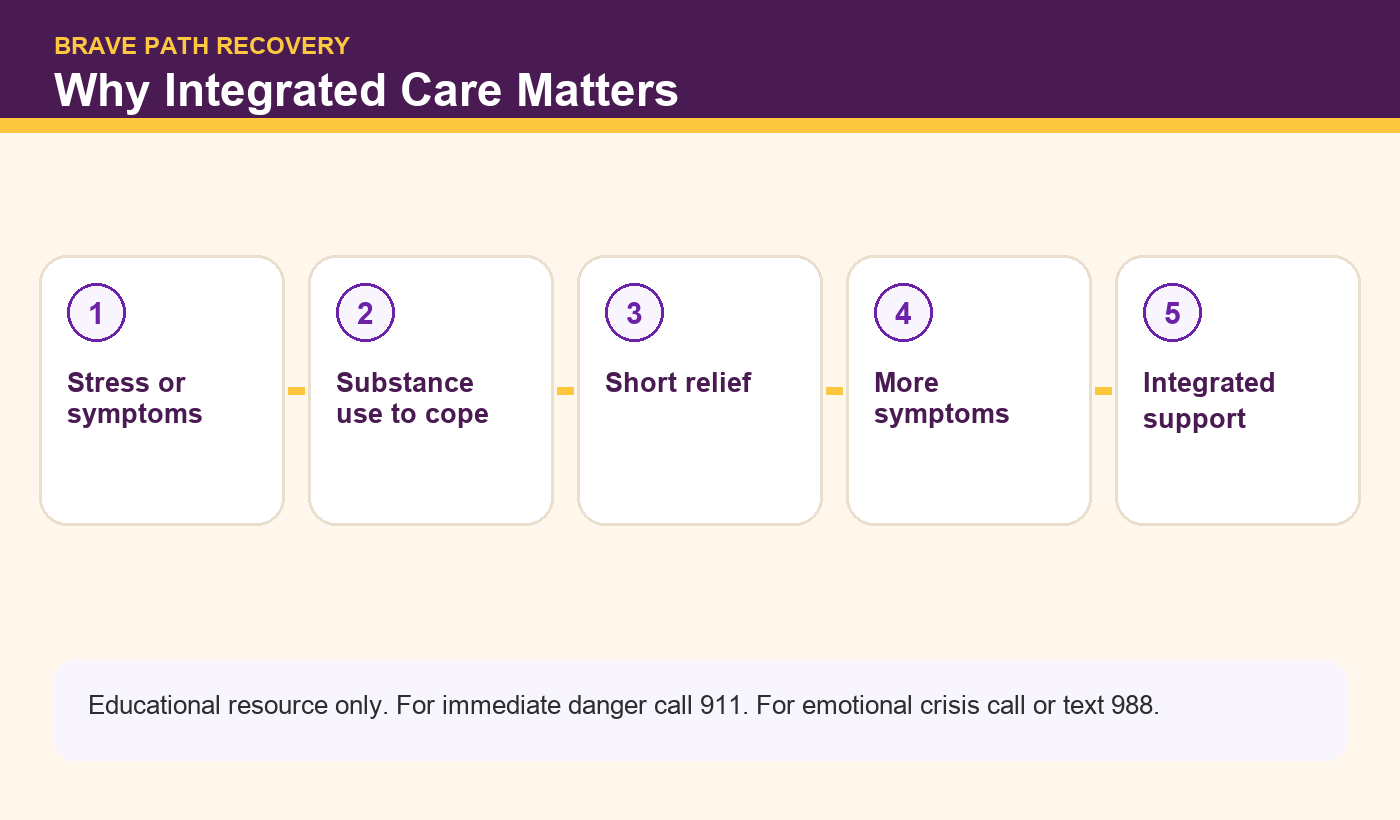
If anxiety and substance use are both affecting your life, tell your clinician about each. Symptoms can overlap, and changes in substance use can complicate the picture. A careful assessment is more useful than assuming which concern caused the other. Learn about dual diagnosis care at Brave Path Recovery.
Prepare a timeline without judging yourself
Write down when anxiety became a problem, what substances you use, and whether symptoms change around use or periods without it. Include prescribed medications. You do not need to diagnose the pattern; the purpose is to give the care team information it can assess. Be honest about any difficulty cutting back or stopping.
Ask how providers will work together
If a therapist, prescriber, and substance use provider are involved, ask who coordinates the plan. Discuss what information can be shared with your consent and how medication questions will be handled. Coordinated care can reduce the burden of explaining the same situation separately at every appointment.
Plan for difficult moments
Identify situations where anxiety and the urge to use tend to occur together. Ask the team to help develop practical responses and a plan for seeking more support. If stopping a substance may cause withdrawal, obtain medical guidance; an outpatient therapy appointment does not replace withdrawal assessment.
Talk with Brave Path Recovery
For non-emergency questions about outpatient care, call (617) 991-3664 or contact our team. Ask about current services and the next step for an assessment.
Further reading

Meet the people behind Brave Path Recovery
Damien Trites, Founder & Executive Director, guides Brave Path’s mission and community. Ryann Whitaker, Program Director, leads day-to-day program operations.
Published by Brave Path Recovery. This educational information does not replace an individual assessment. For program questions or to report a correction, contact our team.