
Begin with the amount of support you need

Choosing a treatment schedule starts with a clinical conversation about what happens between appointments. Describe the times you struggle most, how symptoms affect daily tasks, and what support you can rely on at home. The most convenient schedule may need adjustment if it leaves important needs unanswered. Learn about Brave Path Recovery programs at Brave Path Recovery.

Questions that help guide the recommendation

Ask why one program is being recommended, what it adds to the care you already receive, and what would make another setting more appropriate. Share previous treatment experiences, including what helped and where the plan broke down. If you recently left a hospital, residential program, or detox service, bring the discharge recommendations into this discussion.
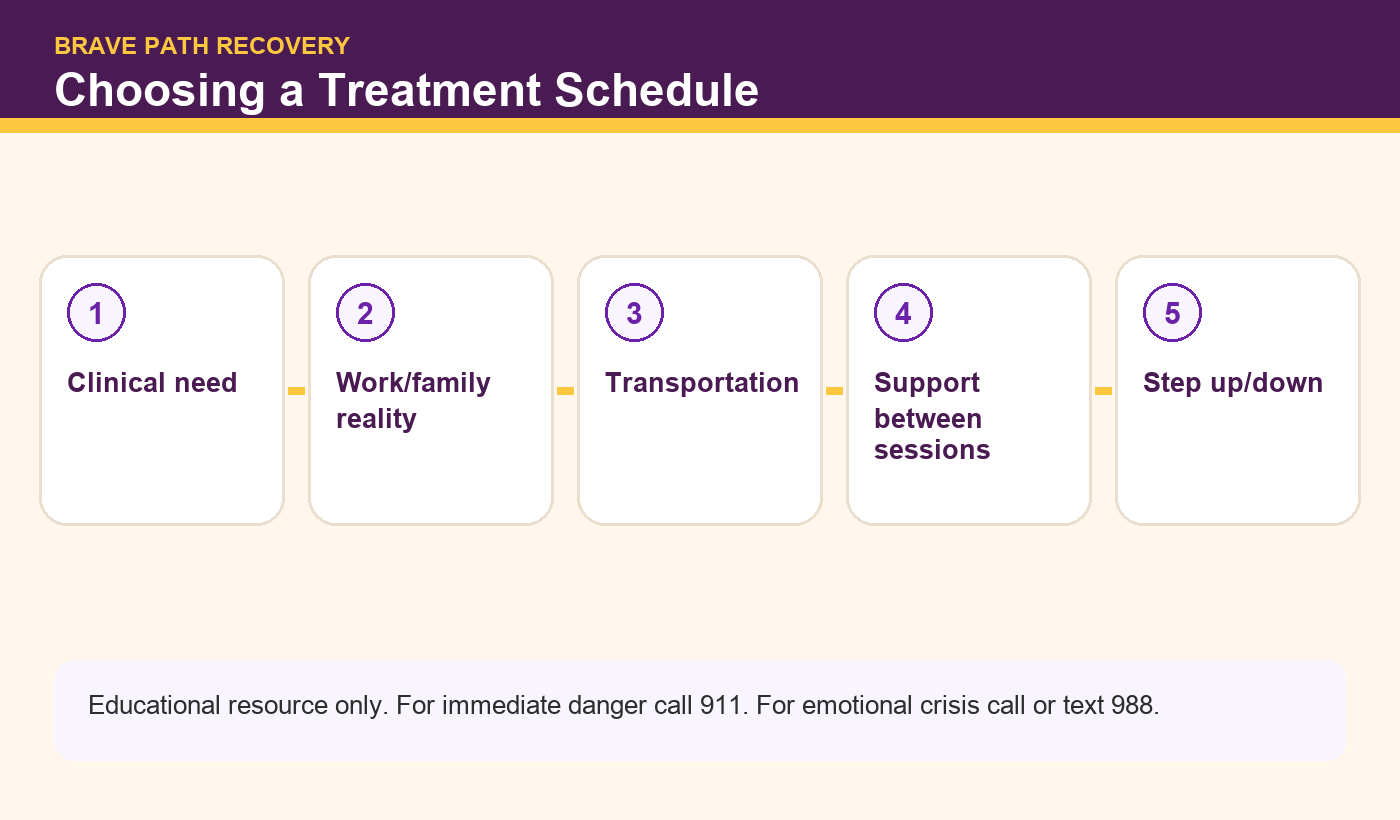
Brave Path Recovery infographic: part-time day treatment vs full-time day treatment Decision Map

Plan for reassessment

A starting level of care is not a permanent label. Ask how you and the team will evaluate whether the current plan is helping. Useful goals can be concrete: attending appointments, managing a difficult part of the day, or keeping up with basic responsibilities. Discuss how to contact the team if your needs change between scheduled reviews.

Then check the practical fit

Once the clinical recommendation is clear, compare current attendance requirements, travel, caregiving, and work arrangements. Ask about both full-time day treatment and part-time day treatment. Each program should explain its own services and schedule; names alone do not tell you exactly what a week will involve.

Talk with Brave Path Recovery

For non-emergency questions about outpatient care, call (617) 991-3664 or contact our team. Ask about current services and the next step for an assessment.

Further reading

SAMHSA: Types of Treatment

Fitting day treatment into your weekly calendar

Compare actual calendars

Part-time and full-time day treatment can affect your week differently. Once a clinician recommends an appropriate level of care, ask for the current schedule and put it next to your work shifts, travel time, school obligations, and caregiving. Include the time needed before and after appointments rather than counting session hours alone. Learn about day treatment programs at Brave Path Recovery.

Solve the predictable conflicts first

Identify recurring conflicts before you enroll. Who can handle a pickup? What happens if a shift changes? Is your transportation dependable on every required day? Ask the program about attendance expectations and how to communicate a problem. Avoid relying on exceptions that have not been discussed with the team.

Leave room to recover between appointments

A calendar packed with treatment and responsibilities may leave little time for meals, rest, or practicing what you learn. Consider which tasks you can temporarily share or simplify. Ask a trusted person for a specific kind of help, such as one regular ride, rather than assuming they know what you need.

Separate schedule preference from care needs

A shorter schedule is not automatically the right choice because it is easier to arrange. If the recommended care is difficult to attend, explain the obstacle so the team can help discuss realistic options. For the clinical side of the decision, read choosing the right level of day treatment.

Further reading

SAMHSA: Types of Treatment

For a practical comparison, read Day Treatment and Daily Life: Comparing Schedules and confirm the current program schedule and attendance requirements with admissions.

Meet the people behind Brave Path Recovery

Damien Trites, Founder & Executive Director, guides Brave Path’s mission and community. Ryann Whitaker, Program Director, leads day-to-day program operations.

Published by Brave Path Recovery. This educational information does not replace an individual assessment. For program questions or to report a correction, contact our team.

Choosing Between Full-Time and Part-Time Day Treatment

Brave Path Recovery

Begin with the amount of support you need

Choosing a treatment schedule starts with a clinical conversation about what happens between appointments. Describe the times you struggle most, how symptoms affect daily tasks, and what support you can rely on at home. The most convenient schedule may need adjustment if it leaves important needs unanswered. Learn about Brave Path Recovery programs at Brave Path Recovery.

Questions that help guide the recommendation

Ask why one program is being recommended, what it adds to the care you already receive, and what would make another setting more appropriate. Share previous treatment experiences, including what helped and where the plan broke down. If you recently left a hospital, residential program, or detox service, bring the discharge recommendations into this discussion.

Brave Path Recovery infographic: part-time day treatment vs full-time day treatment Decision Map

Plan for reassessment

A starting level of care is not a permanent label. Ask how you and the team will evaluate whether the current plan is helping. Useful goals can be concrete: attending appointments, managing a difficult part of the day, or keeping up with basic responsibilities. Discuss how to contact the team if your needs change between scheduled reviews.

Then check the practical fit

Once the clinical recommendation is clear, compare current attendance requirements, travel, caregiving, and work arrangements. Ask about both full-time day treatment and part-time day treatment. Each program should explain its own services and schedule; names alone do not tell you exactly what a week will involve.

Talk with Brave Path Recovery

For non-emergency questions about outpatient care, call (617) 991-3664 or contact our team. Ask about current services and the next step for an assessment.

Further reading

SAMHSA: Types of Treatment

Fitting day treatment into your weekly calendar

Compare actual calendars

Part-time and full-time day treatment can affect your week differently. Once a clinician recommends an appropriate level of care, ask for the current schedule and put it next to your work shifts, travel time, school obligations, and caregiving. Include the time needed before and after appointments rather than counting session hours alone. Learn about day treatment programs at Brave Path Recovery.

Solve the predictable conflicts first

Identify recurring conflicts before you enroll. Who can handle a pickup? What happens if a shift changes? Is your transportation dependable on every required day? Ask the program about attendance expectations and how to communicate a problem. Avoid relying on exceptions that have not been discussed with the team.

Leave room to recover between appointments

A calendar packed with treatment and responsibilities may leave little time for meals, rest, or practicing what you learn. Consider which tasks you can temporarily share or simplify. Ask a trusted person for a specific kind of help, such as one regular ride, rather than assuming they know what you need.

Separate schedule preference from care needs

A shorter schedule is not automatically the right choice because it is easier to arrange. If the recommended care is difficult to attend, explain the obstacle so the team can help discuss realistic options. For the clinical side of the decision, read choosing the right level of day treatment.

Further reading

SAMHSA: Types of Treatment

For a practical comparison, read Day Treatment and Daily Life: Comparing Schedules and confirm the current program schedule and attendance requirements with admissions.

Meet the people behind Brave Path Recovery

Damien Trites, Founder & Executive Director, guides Brave Path’s mission and community. Ryann Whitaker, Program Director, leads day-to-day program operations.

Published by Brave Path Recovery. This educational information does not replace an individual assessment. For program questions or to report a correction, contact our team.

Scroll to Top