Written by Brave Path Recovery | Reviewed May 2026
Educational content for adults and families exploring outpatient mental health and addiction treatment in Massachusetts. Reviewed for clarity, safety, and fit with Brave Path Recovery services.
You may be reading this because something has become hard to manage alone, or because a family conversation has reached the point where outside support feels necessary. Start with Brave Path Recovery’s mental health treatment in Milford, MA resource, then use this guide to sort through the practical questions that usually come next.
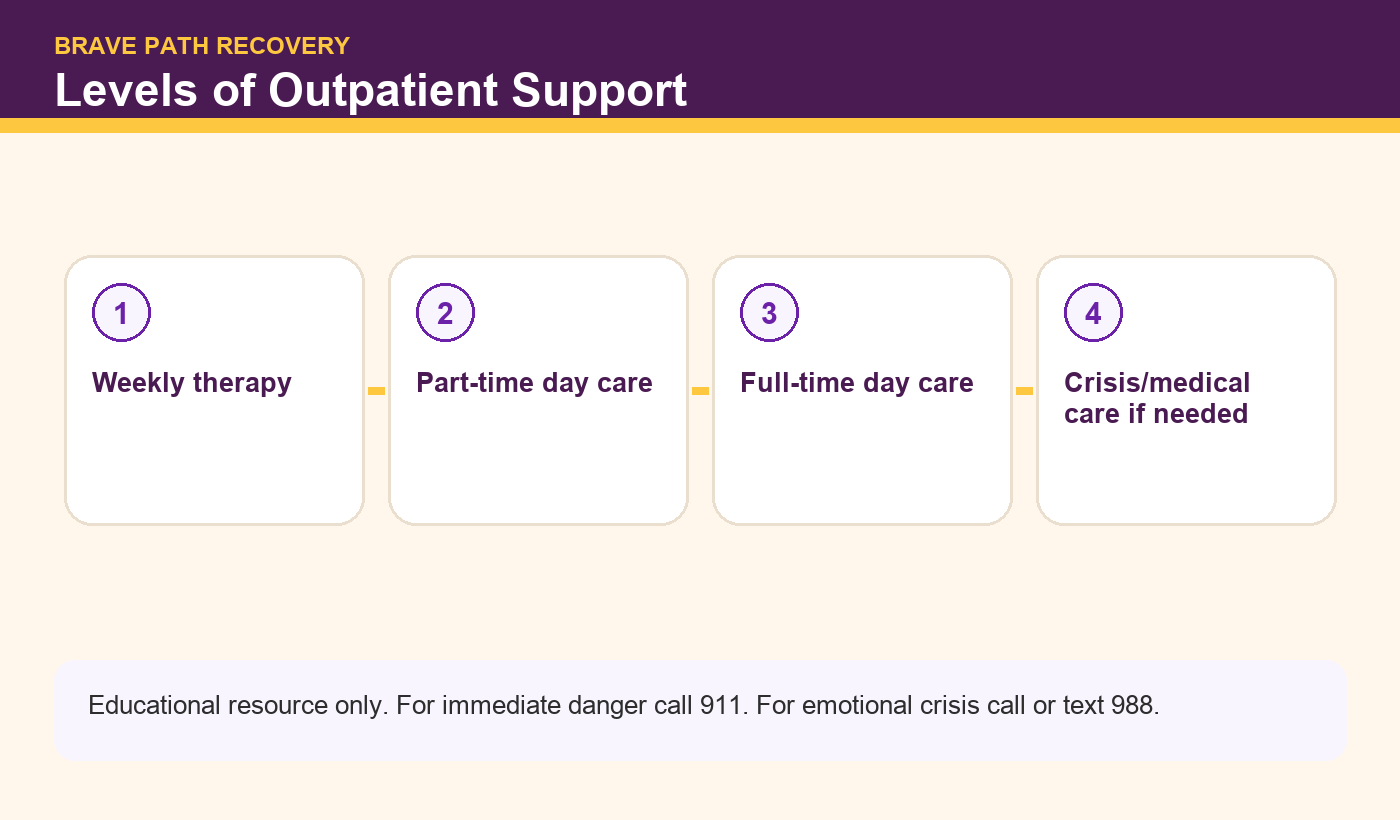
Weekly therapy can be a powerful support, but some seasons require more structure.
Families often start looking at day programs when symptoms are interfering with sleep, work, school, relationships, motivation, or substance use recovery.
The goal is not to make someone feel more broken. It is to match the level of support to the level of need.
Who this guide is for
This guide is for adults and families who need a plain-language way to compare options before they call a program. It explains what to ask, what to watch for, and how to decide whether mental health treatment in Milford, MA is a sensible next step.
- weekly sessions end before the person feels stable
- symptoms are affecting daily functioning
- there are recurring patterns of crisis, avoidance, isolation, or substance use
- the person needs practice and accountability between appointments
A useful guide should do more than define terms. It should help you decide what information matters, what risks should be handled first, and which service page or first call is the most logical next step.
That is especially important in behavioral health and addiction treatment, where two people can arrive with the same question but need very different levels of support. The safest answer is usually the one that starts with assessment instead of assumption.
What to look for in a treatment conversation
A useful first conversation should make the situation clearer. The provider should ask about current symptoms, substance use patterns if relevant, safety concerns, previous treatment, daily responsibilities, support at home, and what has already been tried.
The conversation should also be honest about fit. Outpatient treatment can be a strong option for many people, but it is not emergency care, medical detox, inpatient hospitalization, or a substitute for medical advice.
What a practical plan should include
A practical outpatient plan should connect the concern that brought someone to the page with concrete support: assessment, therapy, group work when appropriate, coping skills, family communication, relapse-prevention planning, and a review of what needs to change outside the treatment room.
The plan should also name what outpatient care cannot safely handle alone. If someone needs emergency support, medical withdrawal management, or 24-hour monitoring, that should be discussed directly. Clear boundaries build trust because they keep the recommendation focused on safety and fit.
- a clear explanation of the recommended level of care
- a schedule the person can realistically attend
- support for mental health symptoms and substance use patterns when both are present
- a plan for cravings, stress, family communication, and high-risk moments
- a way to review progress and adjust the level of support if needed
How to prepare before you reach out
Before calling, it can help to write down what changed, how long it has been happening, what feels most urgent, and what the person has already tried. If you are calling for someone else, keep the notes factual: missed work, isolation, drinking or drug use patterns, panic symptoms, sleep changes, conflict, safety concerns, or previous treatment.
You do not need every answer before you reach out. A good first call should help organize the situation. The goal is to move from a vague worry to a safer next step, whether that step is outpatient assessment, another level of care, or a clearer family conversation.
Questions worth asking
- What makes day treatment different from regular outpatient therapy?
- Can mental health and substance use be addressed together?
- What should someone do if they are in immediate danger?
How Brave Path connects this topic to care
Brave Path Recovery provides outpatient mental health and addiction treatment from its Milford location. For this topic, the most relevant starting point is mental health treatment in Milford, MA.
Related resources include full-time day treatment and mental health treatment. Those links help keep the blog post connected to the service page that best answers the reader’s next question.
For someone else
If you are reading for a loved one, focus on observable changes instead of labels. Write down what has changed, what worries you most, what has helped before, and what feels unsafe or unsustainable. That information can make a first call more useful.
What happens after the first call
A first call may lead to insurance verification, a more detailed assessment, a discussion of program fit, or a recommendation to seek a different level of support first. The goal is a safe next step, not pressure.
Common questions
Is this always the right next step?
Not always. The right level of care depends on safety, symptoms, substance use history, medical needs, home environment, willingness to participate, and the amount of structure someone can realistically use.
Can Brave Path help if mental health and substance use are both involved?
Yes, Brave Path is built around integrated outpatient support for mental health and addiction concerns. If both are part of the picture, resources like dual diagnosis treatment in Milford can help explain why the two should be considered together.
What if I am not sure whether to call?
Uncertainty is a valid reason to call. You can use the Brave Path contact page to ask basic questions, talk through the situation, and learn whether an assessment makes sense. Calling does not mean you have already committed to treatment.
Talk with Brave Path about the next step
If you are trying to make sense of treatment options for yourself or someone you love, a first call can be simple. We will listen, ask a few practical questions, and help you understand a next step without pressure.
Written & Reviewed By
Damien Trites, CARC
Founder & Executive Director, Brave Path Recovery
Damien Trites is a Certified Addiction Recovery Coach and the founder of Brave Path Recovery.
Clinical Reviewer
Ryann Whitaker, LMHC
Program Director, Brave Path Recovery
Ryann Whitaker is a Licensed Mental Health Counselor and Program Director at Brave Path Recovery.